

Spinal pathologies
Lumbar Spinal Stenosis
Lumbar spinal stenosis is a degenerative condition of the spine characterized by the progressive narrowing of the spinal canal and the spaces through which the lumbar nerve roots pass.
This narrowing can cause nerve compression and lead to lower back pain, sciatica, difficulty walking, leg weakness, and progressive functional limitation.
Lumbar stenosis is one of the most frequent causes of pain and disability in adult and elderly patients, especially in the context of chronic vertebral degeneration.
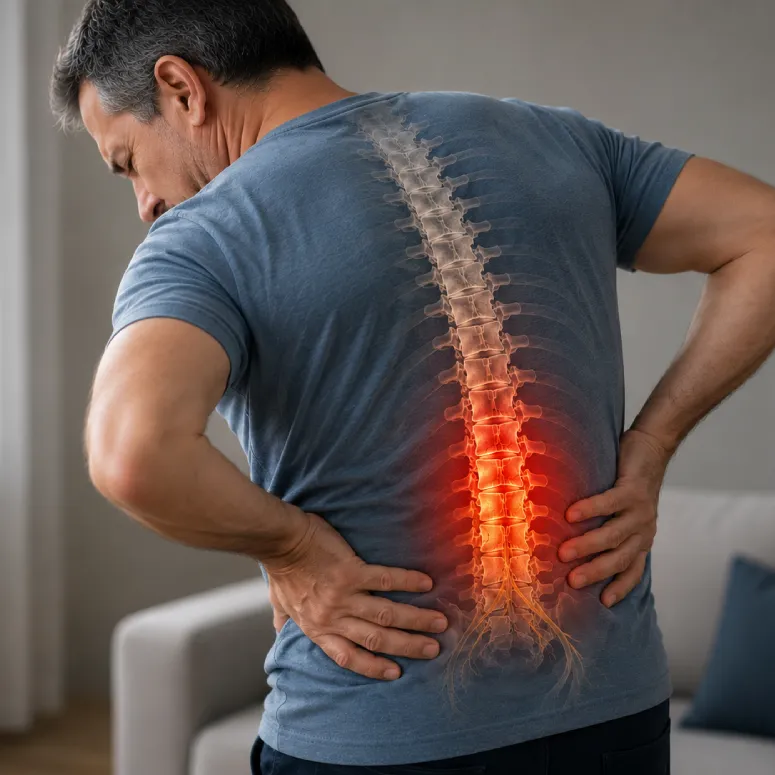
What happens in lumbar stenosis?
The lumbar canal is the anatomical space through which the distal spinal cord and lumbar nerve roots run.
With aging and degenerative processes, different structures of the spine can increase in size or shift, progressively reducing the space available for nerve structures.
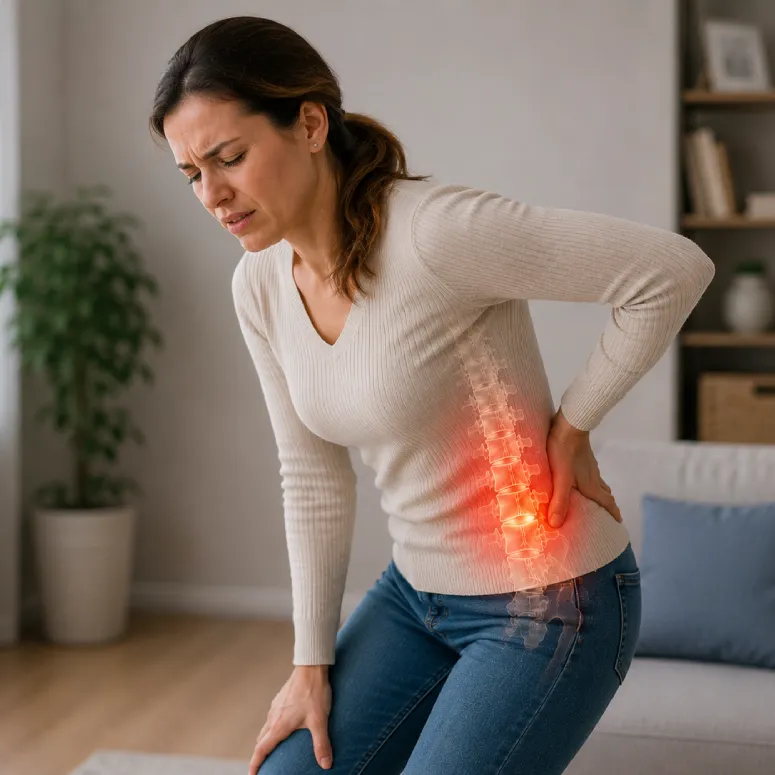
The main mechanisms responsible for the narrowing include:
- Disc degeneration and collapse
- Herniated and bulging discs
- Lumbar facet joint osteoarthritis
- Hypertrophy of the ligaments flavum
- Vertebral osteophytes
- Spondylolisthesis and vertebral instability
Prolonged compression of nerve roots can lead to neural inflammation, neurological disorders, and progressive functional limitation.
What are the most common symptoms?
The symptoms may vary depending on the degree and location of the stenosis.
The most common symptoms include:
- Chronic lower back pain
- Pain radiating to buttocks or legs
- Bilateral or unilateral lumbosciatalgia
- A feeling of heaviness or weakness in the legs
- Neurogenic claudication (pain in lower limbs or fatigue when walking)
- Tingling or sensory disturbances in lower limbs
- Difficulty standing or walking long distances
- Partial improvement when sitting or leaning forward
In advanced cases, progressive neurological deficits and sphincter dysfunction may appear.

In early or moderate stages, treatment may include:
- Specialized pharmacological treatment
- Physiotherapy and functional rehabilitation
- Lumbopelvic strengthening and postural re-education
- Pain and inflammation control

When symptoms persist or progress, advanced interventional techniques may be used, such as:
- Image-guided infiltrative treatments in the epidural cavity
- Radiofrequency and neuromodulation techniques
- Epidural adhesiolysis and neuroplasty
- Percutaneous Lumbar Extraforaminoplasty (PLEF) Park/Ruiz-López Technique
- Minimally invasive spinal endoscopy
- Percutaneous techniques for foraminal and ligamentous decompression
Treatment of Lumbar Spinal Stenosis
At VERTEBRA SpinePain & Regenerative SURGERY CENTERS we perform a comprehensive and personalized approach to lumbar stenosis using advanced spinal intervention techniques, endoscopy and minimally invasive image-guided surgery.
- Image-guided infiltrative treatments in the epidural cavity
- Radiofrequency and neuromodulation techniques
- Epidural adhesiolysis and neuroplasty
- Percutaneous Lumbar Extraforaminoplasty (PLEF) Park/Ruiz-López Technique
- Minimally invasive spinal endoscopy
- Percutaneous techniques for foraminal and ligamentous decompression
Contact us and regain your quality of life
