

Minimally invasive spine surgery
Lumbar Arthrodesis or Transpedicular Lumbar Fixation
Lumbar Arthrodesis or Transpedicular Lumbar Fixation is an advanced surgical technique intended for the treatment of certain degenerative pathologies, instabilities and deformities of the lumbar spine that produce chronic pain, neurological compromise or significant functional limitation.
The aim of the intervention is to permanently stabilize one or more vertebral segments using internal fixation systems, eliminating the pathological movement responsible for the pain and protecting the compromised nerve structures.
Lumbar arthrodesis is one of the reference techniques in spinal surgery for carefully selected patients with advanced degenerative disease or structural instability of the spine.
The surgery is based on the placement of transpedicular screws and stabilizing bars in the affected vertebrae, allowing for a solid and precise fixation of the vertebral segments.
In addition to mechanical stabilization, the procedure includes performing a bone fusion or arthrodesis between the treated vertebrae using bone grafts and, in certain cases, special interbody devices.
Over time, the fused vertebrae consolidate, forming a stable bony block that eliminates abnormal movement and reduces associated mechanical pain.
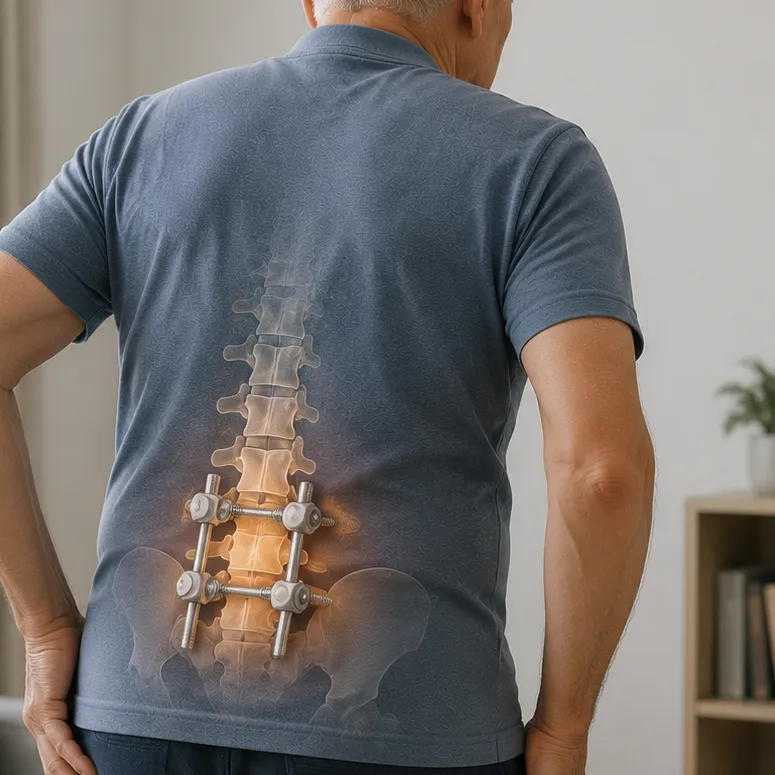
Depending on each clinical situation, the technique may be associated with complementary procedures such as:
- Neural decompression
- Discectomy
- Laminectomy
- Correction of deformities
- Minimally invasive surgery
- Lumbar interbody fusion

Lumbar arthrodesis may be indicated in selected patients with:
- Lumbar vertebral instability
- Spondylolisthesis
- Advanced degenerative disc disease
- Lumbar stenosis with instability
- Degenerative vertebral deformities
- Selected vertebral fractures
- Recurrence of herniated disc associated with instability
- Failed back surgery syndrome
- Refractory mechanical low back pain
The surgical indication must be carefully individualized through specialized clinical assessment, advanced radiological studies, and precise clinical-radiological correlation.
The procedure is performed in an operating room under general anesthesia and radiological control or high-precision surgical navigation.
Depending on the anatomical and pathological characteristics of each patient, surgery can be performed using conventional open approaches or minimally invasive techniques that reduce muscle damage and accelerate functional recovery.
During the procedure, pedicle screws and vertebral fixation systems are placed, followed by stabilization and fusion of the affected segments.
Recovery and benefits
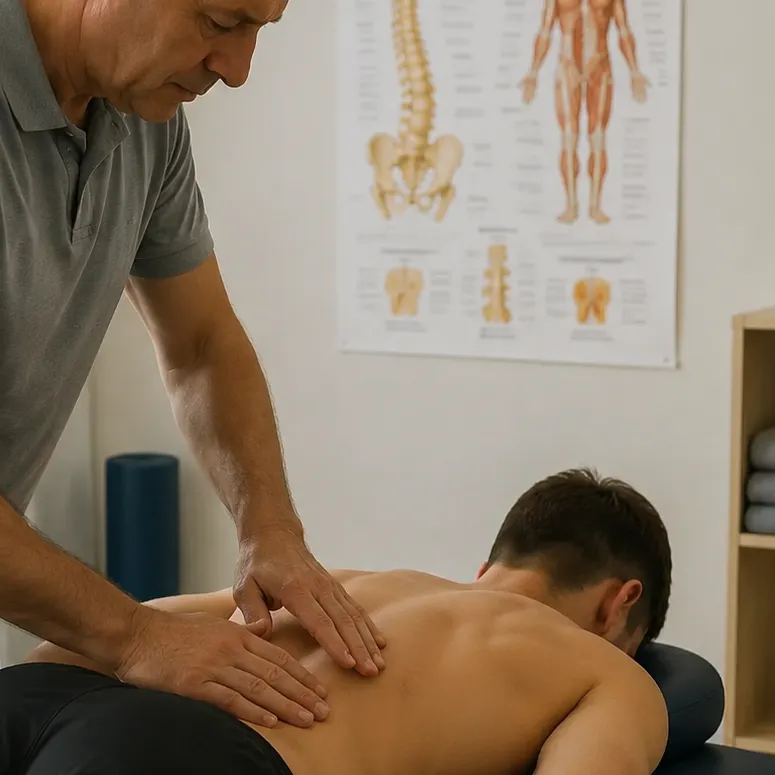
Post-operative recovery is usually progressive and personalized, combined with specific rehabilitation and muscle strengthening programs.
The main advantages of transpedicular lumbar fixation include:
-
Definitive stabilization of unstable segments
-
Reduction of mechanical lower back pain
-
Protection of nerve structures
-
Correction of vertebral deformities
-
Functional improvement and quality of life
-
Possibility of minimally invasive approaches in selected cases
At VERTEBRA SpinePain & Regenerative SURGERY CENTERS we perform advanced image-guided spinal surgery and vertebral stabilization techniques, offering highly specialized and personalized treatments for complex degenerative pathologies of the spine.