

Diagnostic Imaging
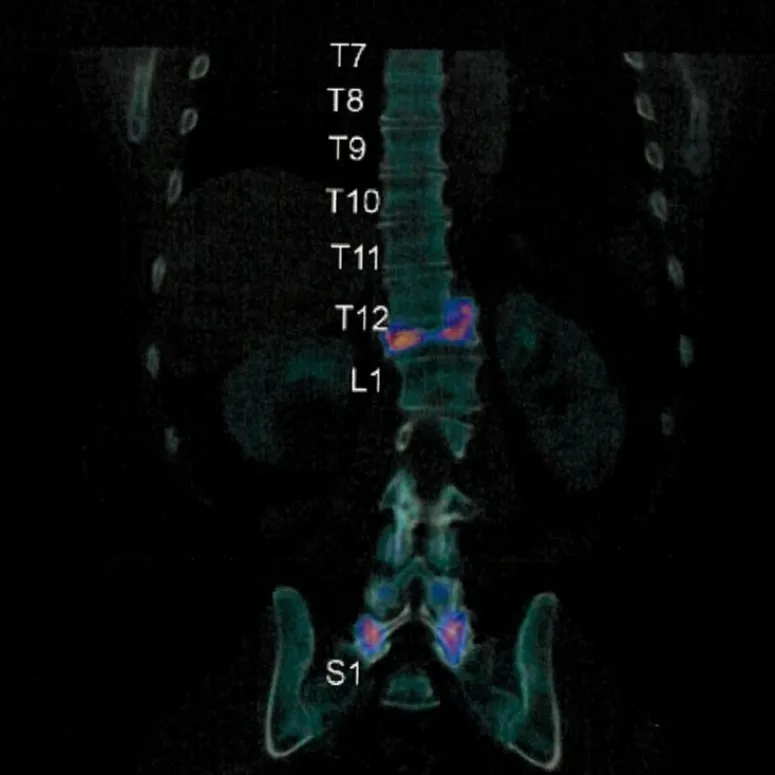
SPECT-CT
Diagnostic imaging assessment is essential for selecting the most appropriate therapeutic approach. SPECT-CT has proven to be an indispensable tool in patients with chronic spinal pain, particularly when:
- Other conventional imaging techniques, such as Magnetic Resonance Imaging (MRI) or conventional CT, are inconclusive.
- Complex clinical situations involve multiple coexisting spinal disorders.
- Highly accurate guidance is required for precision surgical procedures.
Leadership
The implementation of SPECT-CT in the diagnosis of chronic spinal pain was first introduced to the international scientific community by Clínica VERTEBRA in November 2014.
This breakthrough has dramatically improved diagnostic accuracy and specificity in age-related degenerative disorders. Thanks to our scientific contribution, it is now possible to differentiate conditions that were previously difficult to distinguish, ensuring far more targeted and effective treatments for patients.
Computerized Infrared Thermography
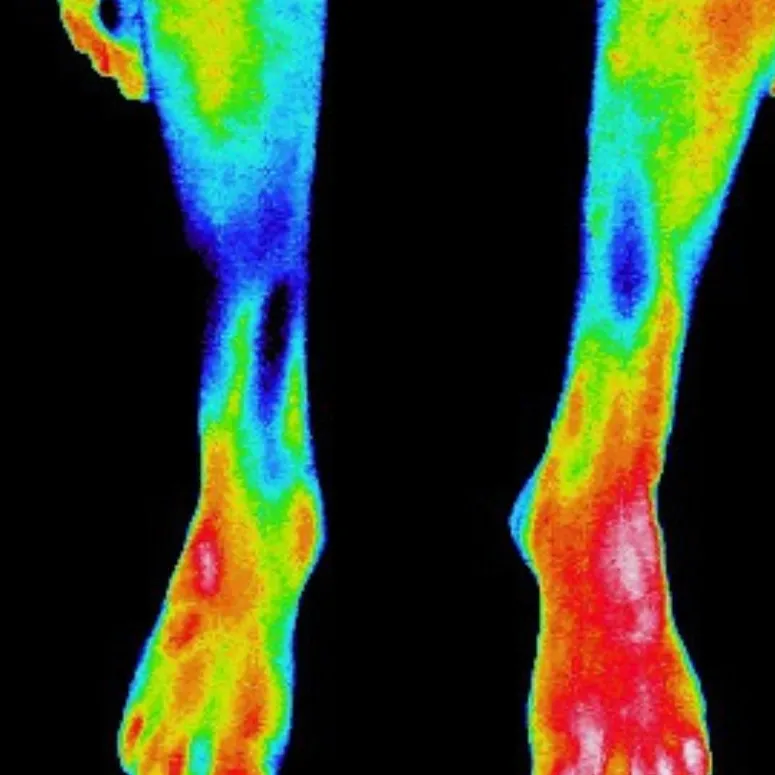
Computerized Infrared Thermography is a non-invasive functional diagnostic technique that enables the analysis, quantification, and visualization of skin temperature variations across the human body using highly sensitive medical thermal cameras and advanced digital image processing systems.
It is an examination that is:
- Non-invasive
- Painless
- Radiation-free
- Does not require intravenous contrast
- Suitable for patients of all ages
At VERTEBRA SpinePain & Regenerative SURGERY CENTERS, we have used this technology for more than four decades as a specialized complementary tool in the assessment of painful, neuropathic, musculoskeletal, and vasomotor disorders, particularly in patients with complex pain or pain that is difficult to evaluate using conventional diagnostic imaging.
Skin temperature is directly influenced by the autonomic nervous system, microcirculation, and the inflammatory activity of tissues. Neurological, inflammatory, or vascular disorders may produce detectable thermal changes even before structural abnormalities become visible on other imaging studies.
Computerized Infrared Thermography records these thermal patterns using high-precision infrared sensors, generating computerized thermal maps that allow the identification of thermal asymmetries, pathological hyperthermia or hypothermia, and abnormalities in vascular or neurological distribution.
Computerized Infrared Thermography can provide highly valuable functional information in a wide range of disorders, particularly when pain has a neuropathic, inflammatory, or autonomic component.
Main Clinical Applications
- Peripheral neuropathic pain
- Cervical and lumbar radiculopathies
- Complex Regional Pain Syndrome (CRPS I and II)
- Postherpetic neuralgia
- Entrapment neuropathies
- Carpal Tunnel Syndrome
- Painful neuromas
- Postoperative pain
- Painful Scar Neuropathy
- Sympathetic dysfunction
- Vasomotor disorders
- Fibromyalgia and complex chronic pain
- Muscle injuries and inflammatory tendinopathies
- Functional assessment of inflammatory joint disorders
The clinical correlation between thermographic findings and the medical examination can provide valuable additional information to individualize the diagnosis and guide treatment.
Special Interest in Complex Regional Pain Syndrome (CRPS)
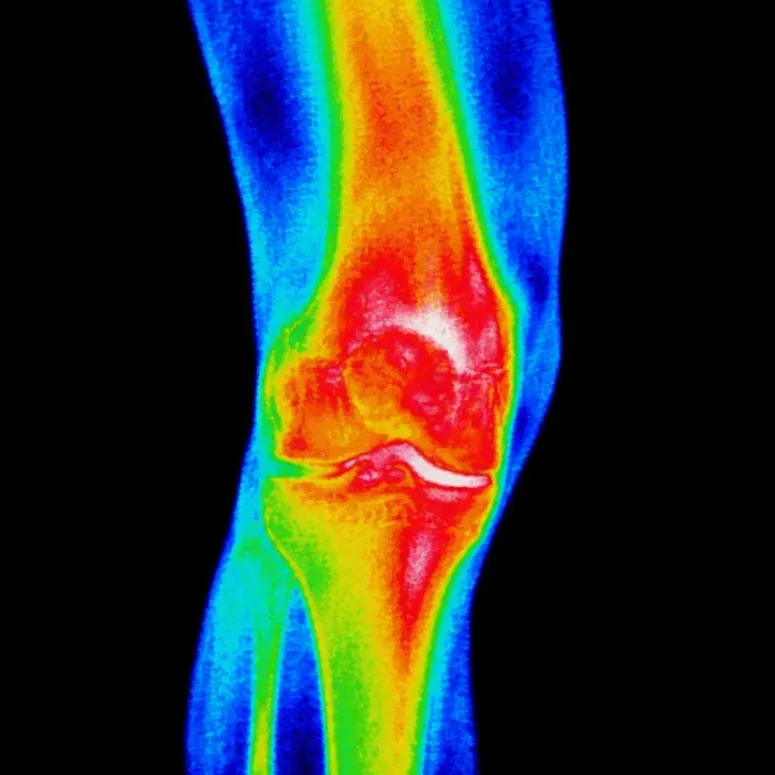
Medical thermography is of particular importance in patients with suspected:
- CRPS Type I
- CRPS Type II (Causalgia)
These patients may present characteristic thermal abnormalities secondary to dysfunction of the sympathetic nervous system, including:
- Regional thermal asymmetries
- Cold or warm extremities
- Abnormal vasomotor distribution patterns
- Dynamic temperature changes
Medical thermography is an innovative and highly valuable tool in the multidisciplinary assessment of these complex disorders.
Ultrasound-Guided Procedures
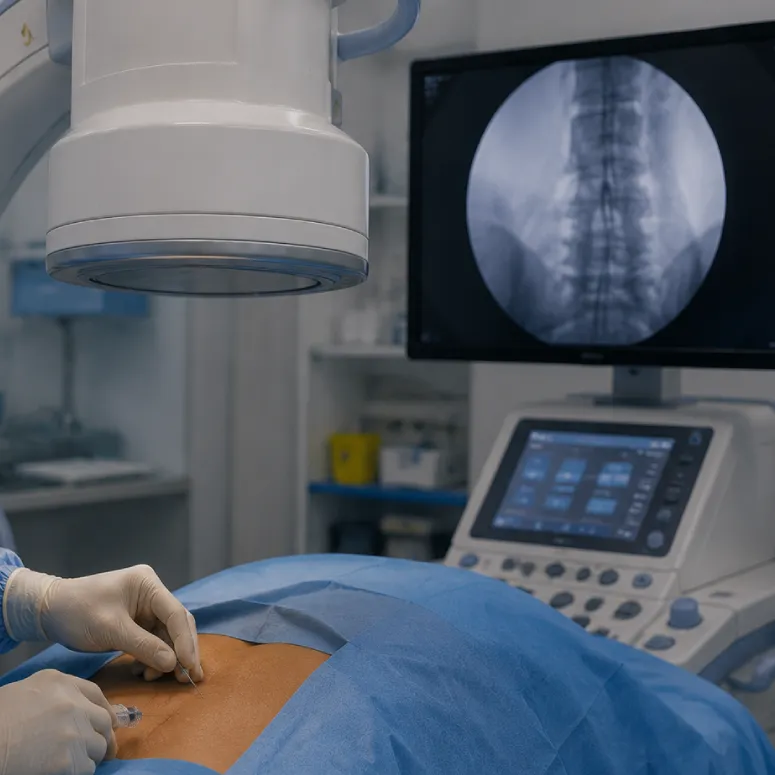
The ultrasound-guided procedure is a tool that allows diagnostic and therapeutic procedures to be performed with a high level of precision, safety, and real-time anatomical control.
At VERTEBRA SpinePain & Regenerative SURGERY CENTERS, we use high-resolution ultrasound as an essential support tool for musculoskeletal diagnosis and for performing advanced interventional procedures in spinal disorders, joint pathology, peripheral nerves, and regenerative medicine.
Ultrasound guidance uses high-frequency ultrasound waves to visualize muscles, tendons, ligaments, nerves, joints, blood vessels, and soft tissues in real time, allowing needles or therapeutic instruments to be directed with maximum precision toward the target anatomical structure.
Ultrasound guidance allows:
- Direct visualization of anatomical structures
- Real-time dynamic control
- Greater therapeutic precision
- Lower risk of vascular or nerve injury
- Reduction of complications
- Greater clinical effectiveness
- Optimization of treatment distribution
Real-time ultrasound visualization significantly improves the accuracy of numerous interventional procedures.
- Injection treatments
- Perineural procedures
- Guided Regenerative Therapies
In addition to its therapeutic usefulness, ultrasound is a highly valuable dynamic diagnostic tool, allowing the assessment of moving structures and the reproduction of symptoms during examination.
This can provide particularly useful information in:
- Dynamic tendinopathies
- Nerve entrapment disorders
- Musculotendinous instability
- Sports injuries
- Inflammatory soft tissue disorders
At VERTEBRA SpinePain & Regenerative SURGERY CENTERS, we combine advanced ultrasound technology with extensive experience supported by more than four decades of expertise in musculoskeletal interventional procedures and minimally invasive treatments.
Our goal is to provide more precise, safer, and personalized procedures by integrating functional diagnosis, advanced imaging, and state-of-the-art therapies within a comprehensive patient-centered approach.
Contact us and regain your quality of life
