

Pain intervention
Treatments for the Intervertebral Disc
Endoscopic Discectomy
Endoscopic Spinal Discectomy is an advanced minimally invasive surgical technique indicated for the treatment of certain herniated discs and compressive pathologies of the spine.
This procedure allows for the treatment of nerve root compression through minimally invasive surgical approaches, promoting faster recovery, less postoperative pain, and optimal preservation of the anatomical structures of the spine.
Unlike conventional open surgery, endoscopic discectomy minimizes damage to muscles, ligaments, and surrounding tissues, reducing bleeding, postoperative inflammation, and functional recovery time.
The procedure is performed through a small, millimeter-sized incision through which a high-definition endoscopic system equipped with a microcamera and a lighting system is introduced.
The images obtained are displayed in real time on a high-resolution monitor, allowing the neurosurgeon to work with great precision on the affected nerve and disc structures.
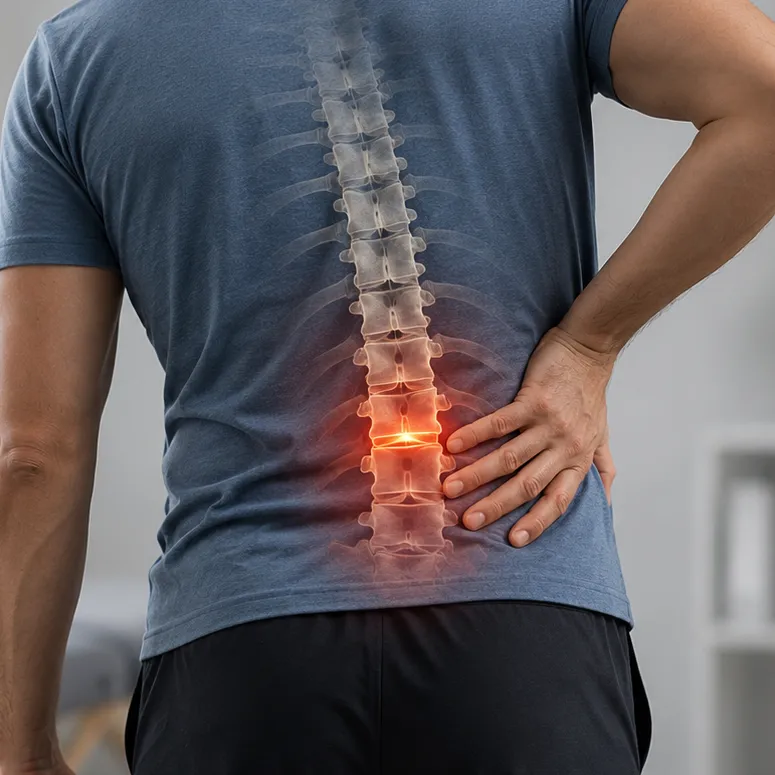
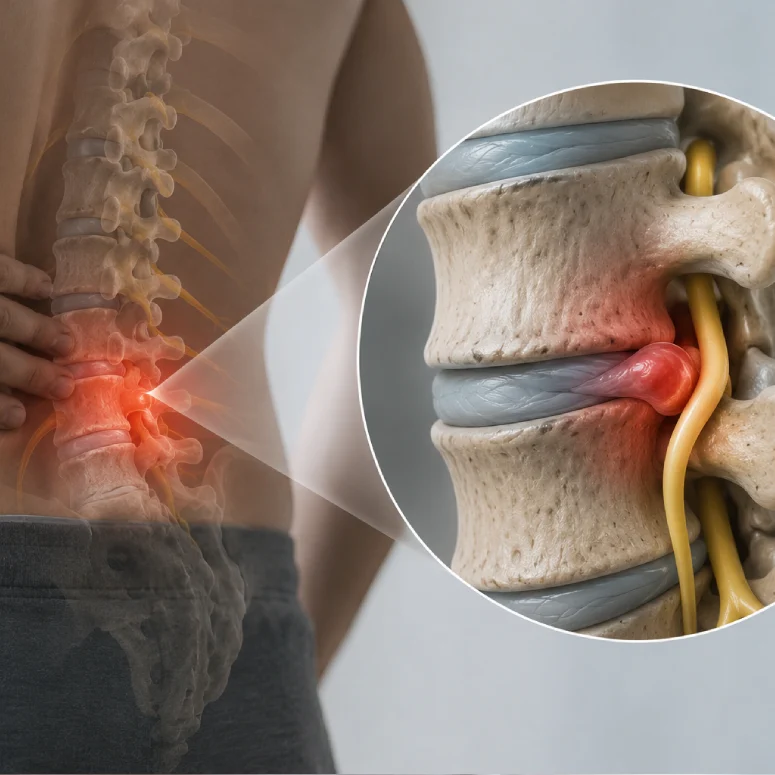
Microsurgical instruments specifically designed for this procedure are introduced through the endoscope to access the intervertebral disc and remove the herniated fragments responsible for nerve compression, preserving as much of the normal anatomy of the spine as possible.
Endoscopic discectomy may be used in selected cases of:
- Lumbar disc herniation
- Cervical disc herniation
- Sciatica or radiculopathy due to disc compression
- Selected foraminal stenosis
- Persistent radicular pain refractory to conservative treatment
The surgery is performed in an operating room under radiological control and using local anesthesia with sedation or general anesthesia, depending on each clinical case.

Recovery and advantages
Thanks to its minimally invasive nature, functional recovery is usually faster compared to conventional surgery.
The main advantages of endoscopic discectomy include:
- Minimal incisions
- Less muscle and tissue damage
- Less postoperative pain
- Faster functional recovery
- Reduced bleeding and scarring
- Shorter hospital stay
- Preservation of vertebral anatomy and spinal stability
At VERTEBRA SpinePain & Regenerative SURGERY CENTERS we perform advanced minimally invasive surgery and spinal endoscopy techniques, offering personalized and highly precise treatments for degenerative and compressive pathologies of the spine.
Discoplasty using intradiscal radiofrequency (Ruiz-López technique)
Radiofrequency Intradiscal Discoplasty with Ozone Application and Intradiscal LR-PRP Instillation is an advanced, minimally invasive technique intended for the treatment of discogenic pain and certain degenerative pathologies of the intervertebral disc.
This procedure combines intradiscal radiofrequency technologies, medical ozone therapy and regenerative medicine using Platelet-Rich Plasma and leukocytes (LR-PRP), with the aim of reducing pain, modulating inflammation and promoting the biological recovery of the intervertebral disc.
It is especially indicated in patients with degenerative disc disease, contained disc protrusions or herniations, discogenic lumbar or cervical pain and selected cases of radiculopathy, when conservative treatment has not achieved sufficient improvement and it is desired to avoid or delay conventional surgery.
The treatment is performed by percutaneous access to the intervertebral disc under high-precision radiological control.
A specially designed, thin cannula is inserted into the intervertebral disc using an intradiscal radiofrequency system that targets the nucleus and internal fibers. The radiofrequency produces controlled thermal modulation that can help reduce disc pain, decrease intradiscal pressure, and stabilize small internal fissures in the annulus fibrosus.
Subsequently, the intradiscal application of medical ozone is performed, a controlled mixture of oxygen-ozone with anti-inflammatory, analgesic and oxidative stress modulating properties, widely used in interventional spinal techniques.
Finally, intradiscal instillation of LR-PRP (Leukocyte-Rich Platelet Rich Plasma), an autologous biological concentrate rich in growth factors obtained from the patient’s own blood, is performed. The aim of LR-PRP is to promote a regenerative biological environment and modulate the inflammatory and degenerative processes of the intervertebral disc.
The combination of these therapies allows for the simultaneous treatment of the mechanical, inflammatory, and biological components involved in disc degeneration.
The technique is performed in an operating room under radiological control and strict sterility measures.
The procedure is usually performed under intravenous sedation and local anesthesia, ensuring maximum patient comfort and safety.
After locating the affected disc using fluoroscopy, percutaneous cannulas are inserted into the intervertebral disc to sequentially perform the treatment using radiofrequency, ozone application and intradiscal LR-PRP instillation.
It is an outpatient or short hospital stay procedure, generally allowing discharge on the same day.
Recovery is usually quick and progressive, allowing a gradual return to normal activities within a few days, following specific medical and rehabilitation recommendations.
The main advantages of advanced intradiscal discoplasty include:
- minimally invasive technique
- Preservation of vertebral anatomy
- Absence of open surgery
- Faster functional recovery
- Reduction of discogenic and radicular pain
- Modulation of intradiscal inflammation
- Integration of regenerative biological therapies
- Possibility of delaying or avoiding conventional surgery in selected patients
At VERTEBRA SpinePain & Regenerative SURGERY CENTERS we perform advanced image-guided spinal intervention and regenerative medicine techniques, offering personalized and high-precision treatments for degenerative spinal pathologies.
Ozone discolysis
Ozone discolysis is a minimally invasive technique indicated for the treatment of discogenic pain and certain herniated or bulging discs of the spine.
This procedure uses intradiscal medical ozone with the aim of reducing inflammation, decreasing pressure within the intervertebral disc and relieving compression on nerve structures, thus contributing to the improvement of lumbar, cervical or radicular pain.
The technique is especially indicated in patients with contained disc herniation, disc protrusion, degenerative disc disease or sciatica secondary to disc compression, when conservative treatment through medication, physiotherapy or rehabilitation has not achieved sufficient improvement and it is desired to avoid or delay conventional surgery.
Ozone discolysis consists of the precise application of a therapeutic oxygen-ozone mixture inside the affected intervertebral disc.
Medical ozone possesses anti-inflammatory, analgesic, and oxidative stress modulating properties. Furthermore, it can produce a partial reduction in the volume of the nucleus pulposus, decreasing intradiscal pressure and mechanical compression of the nerve roots.
The combination of these effects allows for a reduction in local inflammation, improvement of painful symptoms, and promotion of progressive functional recovery.
This is a percutaneous procedure performed using high-precision image-guided techniques, without the need for open surgery or disc resection.
The technique is performed in an operating room under radiological control and strict sterile conditions.
The procedure is usually performed under intravenous sedation and local anesthesia to ensure maximum patient comfort and safety.
Using fluoroscopy, the affected intervertebral disc is located, and a thin needle is inserted percutaneously into the disc. Subsequently, the oxygen-ozone mixture is administered in a controlled manner intradiscally and, in certain cases, also around the affected nerve root.
The procedure is usually short-lived and is generally performed on an outpatient basis or with a short hospital stay.
Recovery is usually quick and progressive, allowing the patient to gradually return to their usual activities within a few days, following specific medical recommendations.
During the first 24–72 hours, a slight, transient local discomfort may appear, generally controllable with conventional analgesic treatment.
The main advantages of ozone discolysis include:
- minimally invasive technique
- Absence of open surgery
- Preservation of vertebral anatomy
- Rapid functional recovery
- Reduction of lumbar, cervical and radicular pain
- Reduction of disc and periradicular inflammation
- Less tissue damage and shorter recovery time
- Possibility of avoiding or delaying conventional surgery in selected patients
At VERTEBRA SpinePain & Regenerative SURGERY CENTERS we perform advanced spinal intervention treatments and image-guided therapies for the management of degenerative and disc pathologies of the spine, offering personalized, precise and minimally invasive solutions.
Disc regeneration using autologous mesenchymal stem cells
Disc Regeneration using Autologous Mesenchymal Stem Cells is an advanced Regenerative Medicine technique intended for the biological treatment of disc degeneration and chronic discogenic pain.
The aim of this treatment is to act on the biological mechanisms involved in the degeneration of the intervertebral disc, promoting a regenerative environment that allows modulation of inflammation, improvement of disc function and reduction of pain associated with degenerative disc disease.
The technique is especially indicated in patients with lumbar or cervical disc degeneration, persistent discogenic pain, contained disc protrusions and certain cases of degenerative spinal disease, when conservative treatment has not achieved adequate improvement and it is desired to avoid or delay more aggressive surgical procedures.
What are Mesenchymal Stem Cells?
Mesenchymal stem cells are cells with regenerative capacity and modulation of inflammation, capable of participating in tissue repair processes and stimulating biological regeneration mechanisms.
This procedure uses autologous cells, that is, cells obtained from the patient’s own body, from adipose tissue, thus minimizing the risk of rejection or immunological reactions.
These cells possess anti-inflammatory, immunomodulatory, and regenerative properties, and can contribute to improving the biological microenvironment of the degenerated intervertebral disc.
Surgical procedures are performed in the operating rooms of VERTEBRA SpinePain and Regenerative SURGERY CENTERS, equipped with the latest technology, under Monitored Anesthetic Care, using intravenous sedation with propofol and supplemental nasal oxygen under strict sterility measures and high-precision radiological control.
The extracted adipose tissue is processed in the Clean Room of VERTEBRA SpinePain and Regenerative SURGERY CENTERS, which has a biosafety level III (BSL-III) and complies with GLP/GMP regulations. Here, the Stromal Vascular Fraction (SVFs) and Mesenchymal Stem/Stromal Cells (MSCs) are isolated, cultured, and cryopreserved.
The treatment is performed by obtaining and subsequently applying intradiscal cell concentrates rich in autologous mesenchymal stem cells.
After specialized processing of the biological material obtained from the patient, the cell concentrate is precisely infiltrated into the interior of the affected intervertebral disc using image-guided percutaneous techniques.
The goal is to promote biological processes of repair and inflammatory modulation within the degenerated disc, attempting to reduce pain and improve spinal function.
Recovery is usually progressive and personalized, typically combined with specific rehabilitation and functional strengthening programs for the spine.
The main advantages of disc regeneration using autologous mesenchymal stem cells include:
- Biological and minimally invasive treatment
- Use of the patient’s own cells
- Modulation of disc inflammation
- Potential regenerative effect on the intervertebral disc
- Preservation of vertebral anatomy
- Absence of open surgery
- Possibility of delaying or avoiding more aggressive surgical procedures
- Integration with advanced rehabilitation and regenerative medicine programs
At VERTEBRA SpinePain & Regenerative SURGERY CENTERS we develop advanced regenerative medicine treatments and image-guided spinal interventions, offering personalized and high-precision therapies for degenerative spinal pathologies.
Laser discectomy
Laser discectomy is a minimally invasive technique intended for the treatment of certain herniated discs and degenerative pathologies of the intervertebral disc that produce lumbar, cervical pain or radicular compression.
This procedure uses laser energy applied inside the intervertebral disc with the aim of decreasing intradiscal pressure, reducing the volume of disc material, and relieving compression on the nerve roots responsible for pain.
The technique is especially indicated in patients with contained disc protrusions or herniations, discogenic pain and certain cases of sciatica or cervicobrachialgia refractory to conservative treatment, when it is desired to avoid or delay more aggressive surgical procedures.
Laser discectomy involves the percutaneous insertion of a thin optical fiber into the affected intervertebral disc under high-precision radiological control.
Through this fiber, laser energy is applied in a controlled manner, producing partial vaporization of the nucleus pulposus and a decrease in intradiscal pressure. This effect can help reduce mechanical compression of the nerve roots and improve pain symptoms.
In addition to mechanical decompression, the treatment can produce neuromodulation effects and a reduction in intradiscal inflammation.
This is a percutaneous technique with minimal tissue damage that preserves vertebral anatomy and avoids conventional open surgery in selected patients.
The technique is performed in an operating room under strict sterility measures and radiological control.
The procedure is usually performed under intravenous sedation and local anesthesia to ensure maximum patient comfort and safety.
Using high-precision fluoroscopy, the affected disc is located, and a thin needle is inserted percutaneously into the intervertebral disc. The laser fiber is then advanced, and energy is applied in a controlled manner according to the characteristics of the treated disc.
The procedure is usually short-lived and is typically performed on an outpatient basis or with a short hospital stay.
Recovery is usually quick and progressive, allowing a gradual return to normal activities within a few days, following specific medical and rehabilitation recommendations.
During the first few days, a mild, transient discomfort may appear in the treated area, which is generally controllable with conventional analgesic treatment.
The main advantages of laser discectomy include:
- minimally invasive technique
- Absence of open surgery
- Minimal incisions
- Preservation of vertebral anatomy
- Rapid functional recovery
- Reduced muscle and tissue damage
- Reduction of disc and radicular pain
- Possibility of avoiding or delaying conventional surgery in selected patients
At VERTEBRA SpinePain & Regenerative SURGERY CENTERS we perform advanced spinal intervention techniques and minimally invasive image-guided surgery, offering personalized and high-precision treatments for degenerative and disc pathologies of the spine.
Contact us and regain your quality of life
