

Spinal pathologies
Arnold's neuralgia
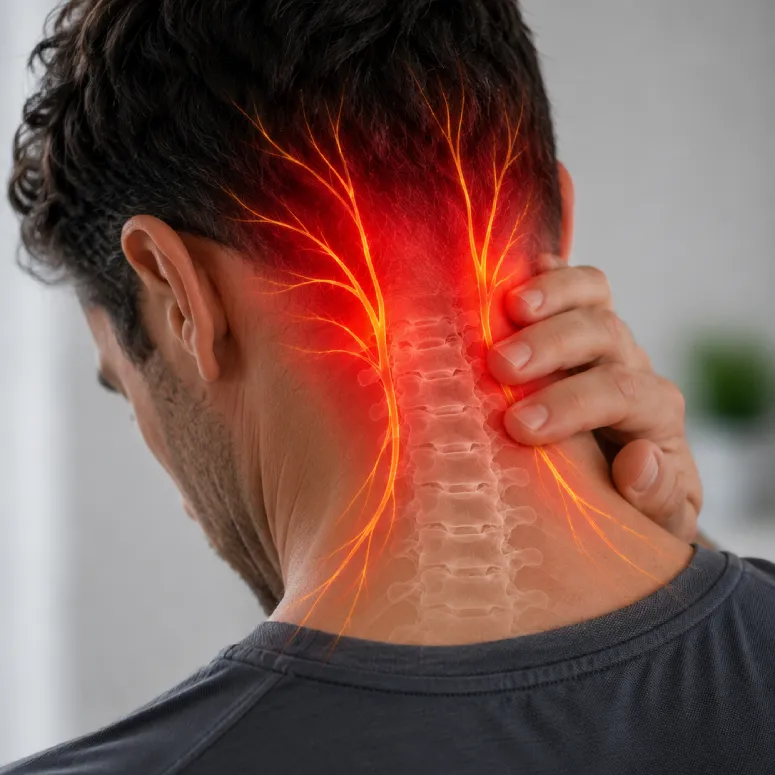
Arnold’s neuralgia, also known as occipital neuralgia, is a painful neuropathic disorder caused by irritation or compression of the occipital nerves, which are responsible for sensation in the back of the head and part of the scalp.
This pathology produces intense pain usually located in the occipital and upper cervical region, which can radiate to the top of the head, the retro-ocular area or the temporal region, significantly affecting the patient’s quality of life.
Arnold’s neuralgia can often be confused with migraine, tension headache, or cervicogenic headache, so it is essential to perform a specialist assessment and an accurate diagnosis.

What are the most common symptoms?
Occipital neuralgia usually manifests itself through:
- Sharp pain or electric shock in the back of the neck
- Pain radiating to the scalp or eye region
- Scalp hypersensitivity
- Associated neck pain
- Burning sensation or occipital pressure
- Recurrent episodes of intense pain
- Discomfort when moving the neck or resting the head
In some patients the pain may be continuous, while in others it appears in the form of crises or intermittent episodes.

What are the causes?
Arnold’s neuralgia can be related to multiple factors, including:
- Cervical muscle contracture and overload
- Degenerative cervical pathology
- Upper cervical osteoarthritis
- Compression or irritation of the occipital nerves
- Cervical trauma
- Postural alterations
- Previous cervical surgery
- Chronic nerve sensitization
In many cases there is a combination of muscular, articular and neuropathic factors that contribute to the persistence of pain.
Specialized diagnosis
The diagnosis is based on a detailed clinical evaluation and the identification of the painful territory corresponding to the occipital nerves.
Selective anesthetic block of the occipital nerve can be particularly useful both to confirm the diagnosis and to guide treatment.

Treatment of Arnold's Neuralgia
Treatment should be individualized according to the intensity of the pain, the duration of the symptoms, and the response to previous therapies.
At VERTEBRA SpinePain & Regenerative SURGERY CENTERS we perform a comprehensive and specialized approach to occipital neuralgia using advanced image-guided interventional techniques.
Among the available therapeutic options, the following stand out:
- Specialized pharmacological treatment
- Ultrasound-guided occipital nerve blocks
- Pulsed radiofrequency ablation of occipital nerves
- Advanced Neuromodulation
- Infiltrative treatments for muscles and myofascials
- Functional cervical rehabilitation
- Treatment of associated cervical pathology
Radiofrequency and neuromodulation techniques can offer prolonged pain relief in selected patients with refractory occipital neuralgia.
At VERTEBRA SpinePain & Regenerative SURGERY CENTERS we have a specialized unit for headaches, neuralgia and craniofacial pain, offering advanced and personalized treatments using high precision and minimally invasive techniques that have been developed over four decades of experience.
Contact us and regain your quality of life
