

Spinal pathologies
Dorsal Disc Herniation
Thoracic or dorsal disc herniation is a less frequent pathology than cervical or lumbar herniations, but potentially complex due to the proximity of the spinal cord and thoracic neurological structures.
It occurs when part of the dorsal intervertebral disc shifts or protrudes into the vertebral canal or into the nerve foramina, potentially causing compression of nerve roots or the spinal cord.
A dorsal disc herniation can cause persistent back pain, pain radiating to the chest or ribs, and in certain cases, neurological symptoms that require specialist assessment and early treatment.

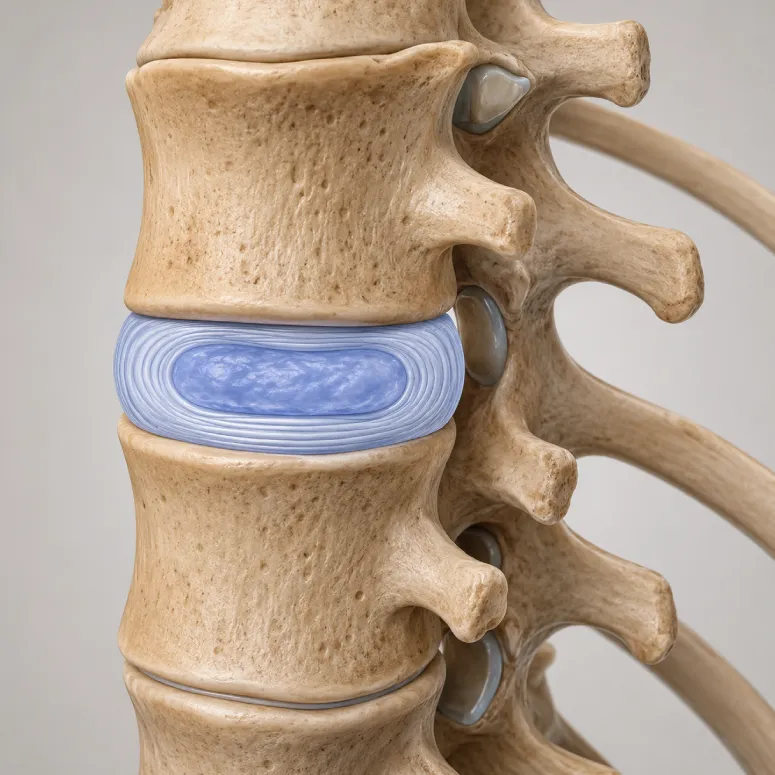
What is a dorsal intervertebral disc?
The intervertebral discs act as shock-absorbing structures between the vertebrae, allowing mobility and absorbing loads on the spine.
With aging, degenerative processes, trauma, or biomechanical overload, the disc can deteriorate and shift towards the spinal canal, causing a herniated disc.
In the dorsal region, the spinal cord space is relatively small, so certain hernias can cause significant neurological compression.
What are the most common symptoms?
The symptoms will depend on the size and location of the herniated disc, as well as the degree of neural or spinal cord compression.
The most common symptoms include:
- Persistent back pain
- Interscapular pain
- Pain radiating to the chest or ribs
- Intercostal neuralgia
- Sensation of chest pressure
- Tingling or sensory disturbances
- Muscle weakness in advanced cases
- Dorsal stiffness and functional limitation
When there is significant spinal cord compression, progressive neurological alterations, difficulty walking, or sensory and motor symptoms may appear that require urgent evaluation.
Specialized diagnosis
The diagnosis requires adequate clinical and radiological correlation.
Magnetic resonance imaging is the fundamental test to assess the degree of disc and neurological compression.
Treatment of dorsal disc herniation
The treatment will depend on the size of the hernia, the symptoms, and the degree of neurological involvement.
In many patients, initial treatment is conservative and includes:
- Specialized pharmacological treatment
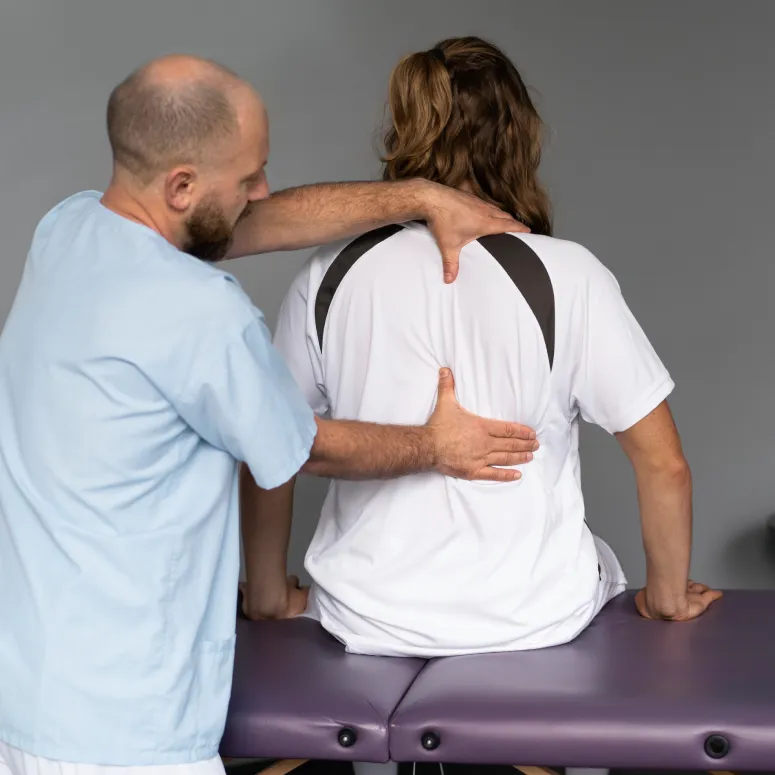
- Physiotherapy and functional rehabilitation
- Posture correction
- Pain and inflammation control
When pain persists or there is neurological involvement, advanced interventional techniques may be used, such as:
- Image-guided infiltrative treatments in the epidural cavity
- Discoplasty using Radiofrequency
- Radiofrequency and neuromodulation techniques
- Minimally invasive intradiscal techniques
- Regenerative Medicine Therapies and Advanced Cell Therapies
In selected cases with significant neurological compression or failure of conservative treatment, minimally invasive or endoscopic back surgery may be necessary.
At VERTEBRA SpinePain & Regenerative SURGERY CENTERS we provide a comprehensive and personalized approach to dorsal pathology using advanced diagnostic techniques, interventional procedures and minimally invasive image-guided surgery.
Our goal is to relieve pain, preserve neurological function, and improve the patient’s quality of life through precise treatments tailored to each clinical situation.
VERTEBRA Clinic is a pioneer in the implementation and development of advanced minimally invasive techniques over the last four decades, having received international recognition.
VERTEBRA Clinic is a pioneer in the international field of Advanced Cell Therapies (cultured and expanded Adipose Tissue Stem or Mesenchymal Cells AD-MSCs) in its own Surgical Center and in high-level facilities for their production and storage (Biosafety Level III Clean Room)
Contact us and regain your quality of life
