

Spinal pathologies
Vertebrogenic Lumbar Pain
Vertebrogenic lumbar pain is a type of chronic lower back pain originating in the vertebral structures of the lumbar spine, especially in the vertebral endplates, the subchondral bone, and the degenerative alterations associated with the intervertebral disc.
This type of pain is related to inflammatory and degenerative processes of the vertebral functional unit and is an increasingly recognized cause of persistent chronic lower back pain.
In many patients, vertebrogenic lumbar pain is associated with advanced disc degeneration, vertebral inflammatory changes, and sensitization of the intraosseous nerve endings responsible for pain transmission.

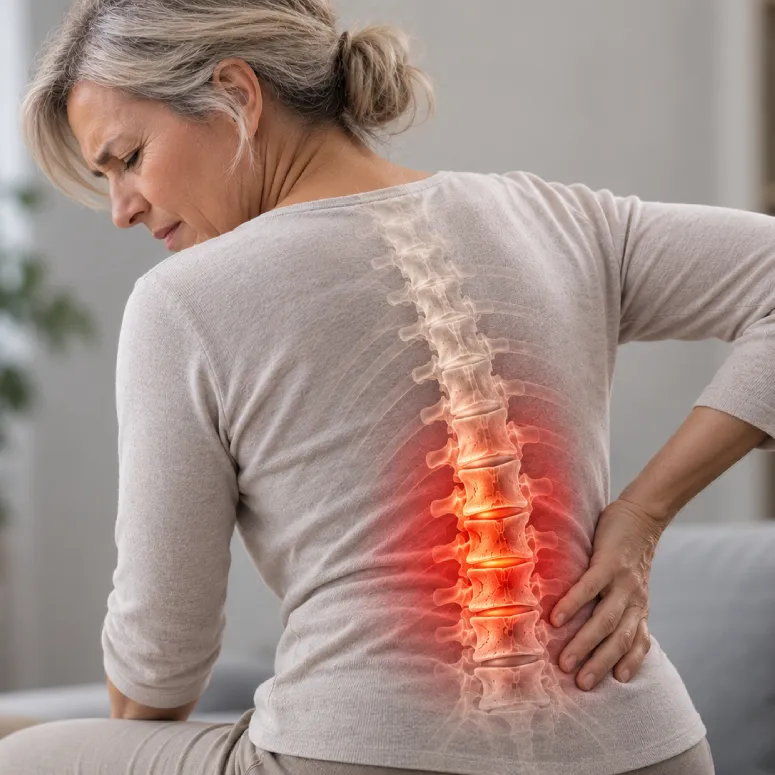
What structures generate vertebrogenic pain?
The lumbar spine is made up of vertebral bodies, intervertebral discs, facet joints, ligaments, and nerve structures that participate in the stability and mobility of the spine.
Degenerative disc processes can cause:
- Inflammation of the vertebral endplates
- Degenerative bone changes
- Vertebral microinstability
- Segmental biomechanical alterations
- Activation of the basivertebral nerve
- Sensitization of intraosseous nerve endings
These alterations can become a major source of chronic lower back pain.
In certain patients, these changes can be identified by magnetic resonance imaging as vertebral inflammatory alterations consistent with Modic changes.

What are the most common symptoms?
Vertebrogenic lumbar pain usually manifests as:
- Deep and persistent lower back pain
- Mechanical pain that worsens with certain movements or loads
- Lumbar stiffness
- Pain when sitting for extended periods
- Lumbar functional limitation
- Lower back muscle fatigue
- Axial pain without predominant radicular radiation
Unlike sciatica, vertebrogenic pain is usually located mainly in the lumbar region and is not always accompanied by nerve compression towards the lower extremities.
Specialized diagnosis
Diagnosis requires an adequate correlation between clinical symptoms and radiological findings.
Magnetic resonance imaging is essential to identify degenerative disc and vertebral changes consistent with vertebrogenic pain.

Treatment of vertebrogenic lumbar pain
The treatment will depend on the degree of degeneration and the clinical characteristics of each patient.
At VERTEBRA SpinePain & Regenerative SURGERY CENTERS we provide a comprehensive and personalized approach to vertebrogenic lumbar pain using advanced spinal intervention techniques, neuromodulation and regenerative medicine.
Among the available therapeutic options, the following stand out:
- Specialized pharmacological treatment
- Physiotherapy and functional rehabilitation
- Postural re-education and lumbopelvic stabilization
- Image-guided infiltrative treatments
- Radiofrequency and neuromodulation
- Basivertebral nerve ablation
- Minimally invasive intradiscal techniques
- Regenerative medicine and biological therapies
- Spinal endoscopy and minimally invasive surgery in selected cases
Radiofrequency ablation of the basivertebral nerve is one of the most innovative techniques for the treatment of chronic vertebrogenic lumbar pain in selected patients with vertebral inflammatory changes.
At VERTEBRA SpinePain & Regenerative SURGERY CENTERS we have a specialized unit for chronic lower back pain, spinal intervention and regenerative spine medicine, offering advanced and personalized treatments using the most precise techniques.
Contact us and regain your quality of life
