

Minimally invasive spine surgery
Basivertebral Nerve Ablation
Radiofrequency ablation of the basivertebral nerve is an advanced, minimally invasive technique intended for the treatment of chronic vertebrogenic or discogenic low back pain associated with degenerative inflammatory changes in the vertebral bodies.
This innovative procedure is especially indicated in patients with chronic lower back pain of at least six months’ duration, refractory to conservative treatments, and who present Modic type 1 or type 2 changes visible on magnetic resonance imaging.
Currently, basivertebral nerve ablation represents one of the most advanced and specific therapies for the treatment of chronic vertebrogenic pain related to inflammatory alterations of the terminal vertebral endplates.
What is the basivertebral nerve?
The basivertebral nerve is a nerve structure located inside the vertebral body responsible for transmitting pain signals from the vertebral endplates and certain structures of the intervertebral disc.
In patients with disc degeneration and Modic changes, there is chronic inflammatory activation of these vertebral bone structures, generating persistent lower back pain and significant functional limitation.
Radiofrequency ablation allows the selective interruption of the transmission of these painful signals through a precise and minimally invasive technique.
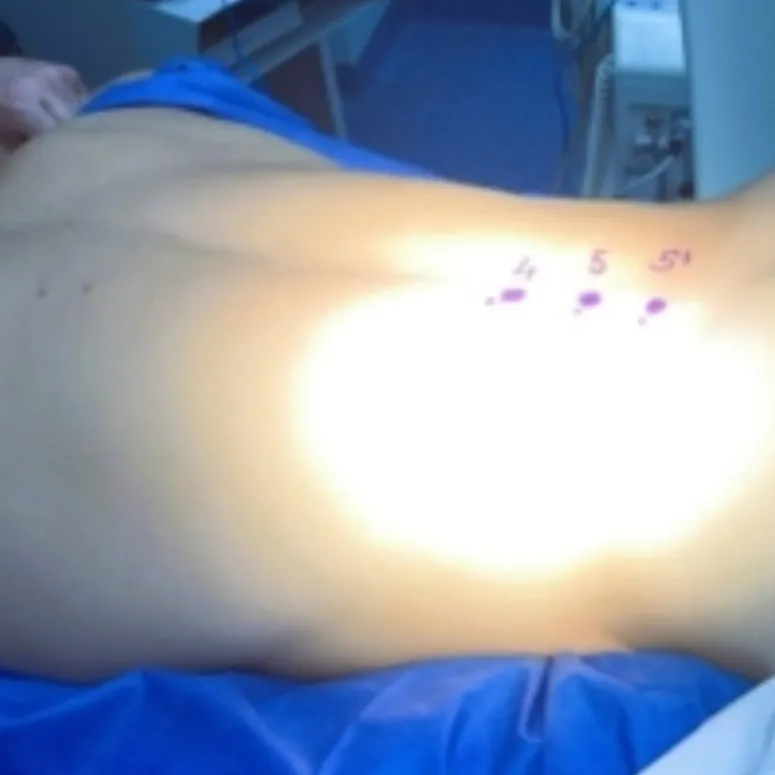
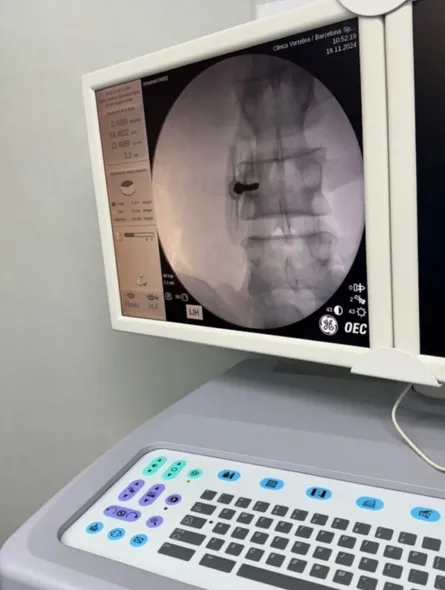
The procedure is performed through image-guided percutaneous access to the interior of the affected vertebral body.
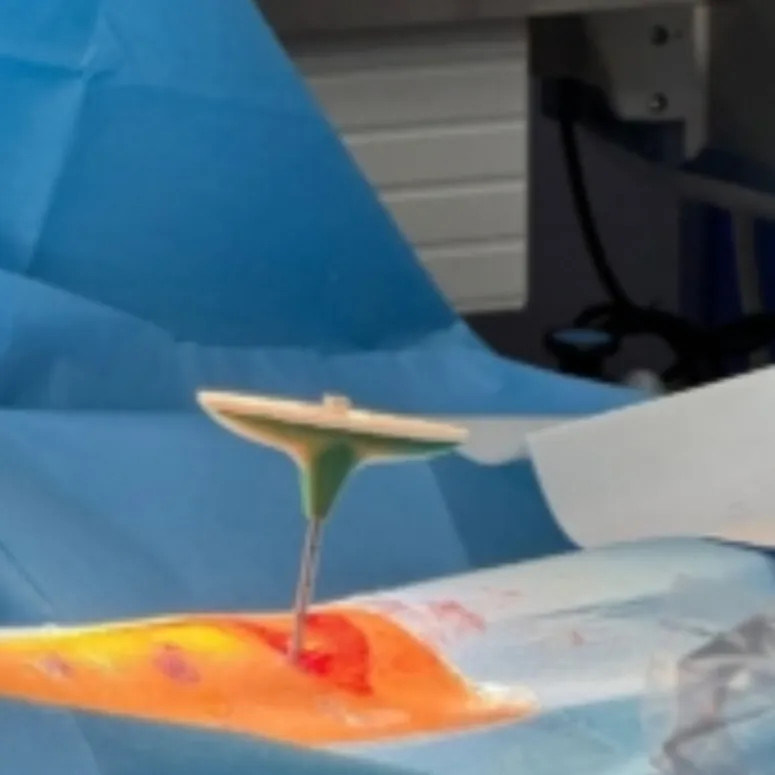
A specialized access system is inserted through a small skin incision until it reaches the anatomical region of the basivertebral nerve. A radiofrequency probe is then introduced, which applies controlled thermal energy to perform selective nerve ablation.
The goal of treatment is to reduce the transmission of vertebrogenic pain and significantly improve the patient’s function and quality of life.
The technique allows one or more vertebral levels to be treated during the same procedure, depending on the clinical and radiological characteristics of each case.
At Clínica Vertebra we combine basivertebral nerve ablation with advanced techniques of intraosseous vertebral regenerative medicine.
In addition, intraosseous instillation of autologous platelet- and leukocyte-rich plasma (LR-PRP) can be performed in the treated vertebral bodies. This biological concentrate, rich in growth factors, is obtained from the patient’s own blood and administered under high-precision radiological guidance.
The aim of this complementary therapy is to modulate vertebral inflammation, promote a regenerative biological environment, and enhance the functional recovery of the affected vertebral structures.
The procedure is performed in the Surgical Unit of VERTEBRA SpinePain & Regenerative SURGERY CENTERS under strict sterility measures and advanced radiological control.
The procedure is usually performed on an outpatient basis, under intravenous sedation, local anesthesia and antibiotic prophylaxis.
After locating the vertebral levels to be treated, percutaneous transpedicular or vertebral access is made to the affected vertebral body to perform the ablation of the basivertebral nerve and, in selected cases, the complementary administration of intraosseous LR-PRP.
Recovery is usually progressive and allows a gradual return to normal activities in a short period of time, following specific medical recommendations.
The main advantages of basivertebral nerve ablation include:
- minimally invasive technique
- Outpatient or short-stay procedure
- Absence of open surgery
- Specific treatment of vertebrogenic pain
- Preservation of vertebral anatomy
- Significant improvement in lower back pain and functionality
- Possibility of combining with regenerative biological therapies
- Faster functional recovery
At VERTEBRA SpinePain & Regenerative SURGERY CENTERS we perform advanced spinal intervention techniques, neuromodulation and image-guided regenerative medicine, offering highly specialized and personalized treatments for complex degenerative pathologies of the spine.