

Minimally invasive spine surgery
Posterior Dynamic Stabilization
Posterior Dynamic Stabilization is an advanced surgical technique intended for the treatment of certain degenerative pathologies and instabilities of the spine, allowing the stabilization of the affected segments while partially preserving the physiological mobility of the spine.
Unlike classic rigid spinal fusion techniques, dynamic stabilization seeks to control pathological movement and reduce mechanical overload on degenerated structures, maintaining a degree of functional mobility and reducing stress on adjacent levels.
This more conservative biomechanical approach may be especially beneficial in selected patients with degenerative lumbar disease, moderate segmental instability, or chronic spinal mechanical pain.
Posterior dynamic stabilization is based on the implantation of special vertebral fixation systems using pedicle screws and flexible or semi-rigid dynamic devices that allow stabilization of the spine without completely blocking movement between the treated vertebrae.
These systems work by modulating the biomechanical loads on the intervertebral discs and facet joints, reducing painful micromovement and promoting a better distribution of forces on the spine.
Depending on the anatomical and degenerative characteristics of each patient, the technique can be combined with neural decompression procedures, minimally invasive surgery, discectomy, or complementary regenerative techniques.

Posterior dynamic stabilization may be indicated in selected patients with:
- Lumbar degenerative disc disease
- Moderate vertebral instability
- Lumbar facet joint osteoarthritis
- Lumbar stenosis associated with instability
- Failed back surgery syndrome
- Chronic mechanical low back pain
- Lumbar segmental degeneration
The surgical indication should be carefully individualized through clinical assessment, advanced imaging studies, and biomechanical analysis of the spine.
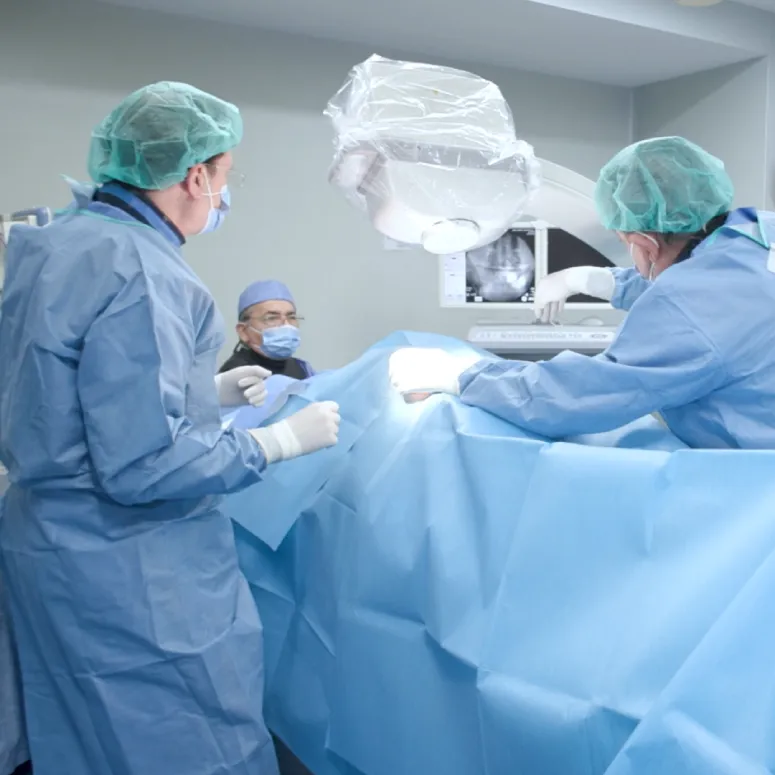
The procedure is performed in an operating room under general anesthesia and high-precision radiological control.
Using limited open surgery techniques or minimally invasive surgery, dynamic stabilization systems are implanted at selected vertebral levels, preserving as much of the muscular and ligamentous structures of the spine as possible.
The goal is to achieve functional stabilization of the affected segment while minimizing surgical trauma and promoting a faster recovery.
Recovery and benefits
Post-operative recovery is usually progressive and personalized, typically combined with specific rehabilitation and muscle strengthening programs.

The main potential advantages of posterior dynamic stabilization include:
- Functional stabilization of the spine
- Partial preservation of segmental mobility
- Less stiffness compared to conventional arthrodesis
- Reduction of overload at adjacent levels
- Improvement of mechanical low back pain
- Possibility of minimally invasive approaches
- Progressive functional recovery
Proper patient selection is a fundamental aspect to optimize the clinical and biomechanical results of the procedure.
At VERTEBRA SpinePain & Regenerative SURGERY CENTERS we perform advanced minimally invasive spinal surgery techniques and image-guided spinal stabilization, offering highly specialized and personalized treatments for complex degenerative spinal pathologies.