

Endoscopic surgery
Endoscopic Transforaminotomy
Endoscopic transforaminotomy is an advanced minimally invasive surgical technique intended for the treatment of nerve root compression at the level of the intervertebral foramen, especially in patients with foraminal stenosis, herniated discs and radiculopathies refractory to conservative treatment.
The procedure allows widening of the nerve root exit space through a high-precision endoscopic approach, reducing neural compression and improving radicular pain, sensory disturbances, and functional limitations.
The technique is a modern and less invasive alternative to certain conventional surgical procedures for lumbar or cervical decompression.
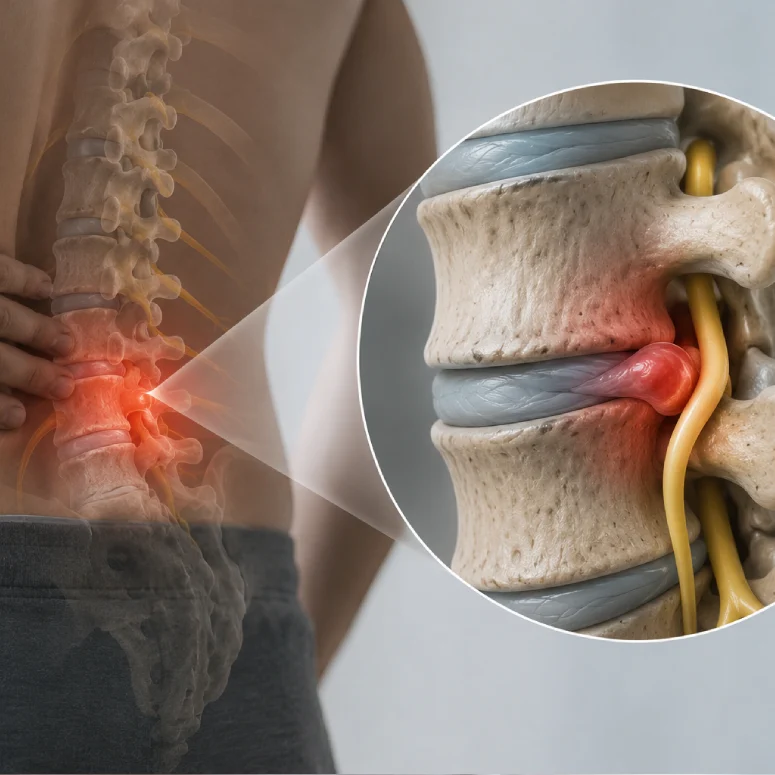
What is the intervertebral foramen?
The intervertebral foramen is the anatomical canal through which the nerve roots exit the spinal column.
Various degenerative processes can cause a progressive narrowing of this space, leading to nerve entrapment and compression. Among the most frequent causes are:
- Foraminal or extraforaminal disc herniations
- Decreased disc height
- Facet joint osteoarthritis
- Ligament hypertrophy
- Vertebral osteophytes
- Fibrosis and periradicular adhesions
Sustained compression of the nerve root can cause lower back or neck pain radiating to the extremities, sciatica, cervicobrachialgia, paresthesia, muscle weakness, and progressive functional limitation.
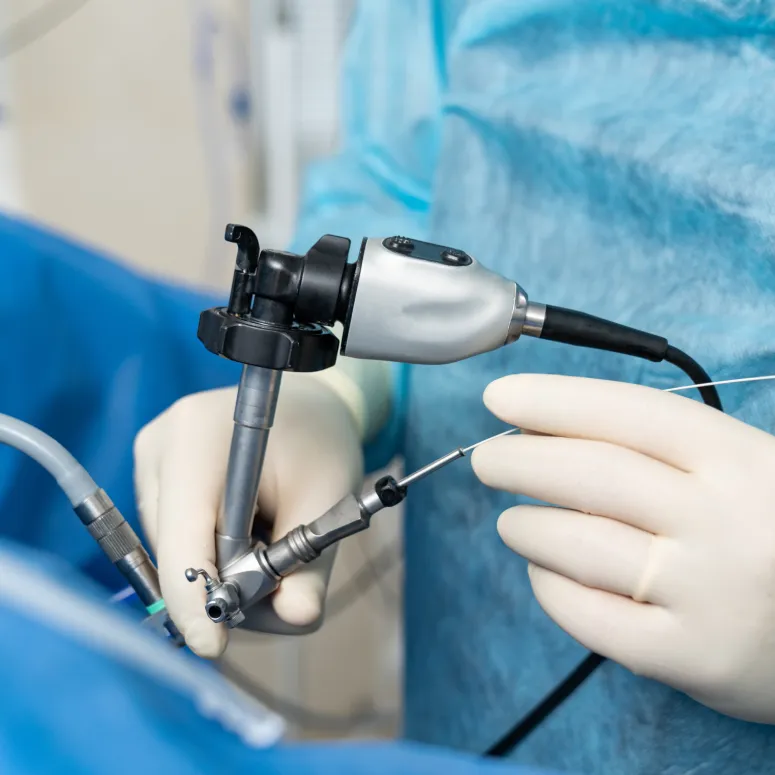
Endoscopic transforaminotomy is performed using a percutaneous approach with minimal tissue damage.
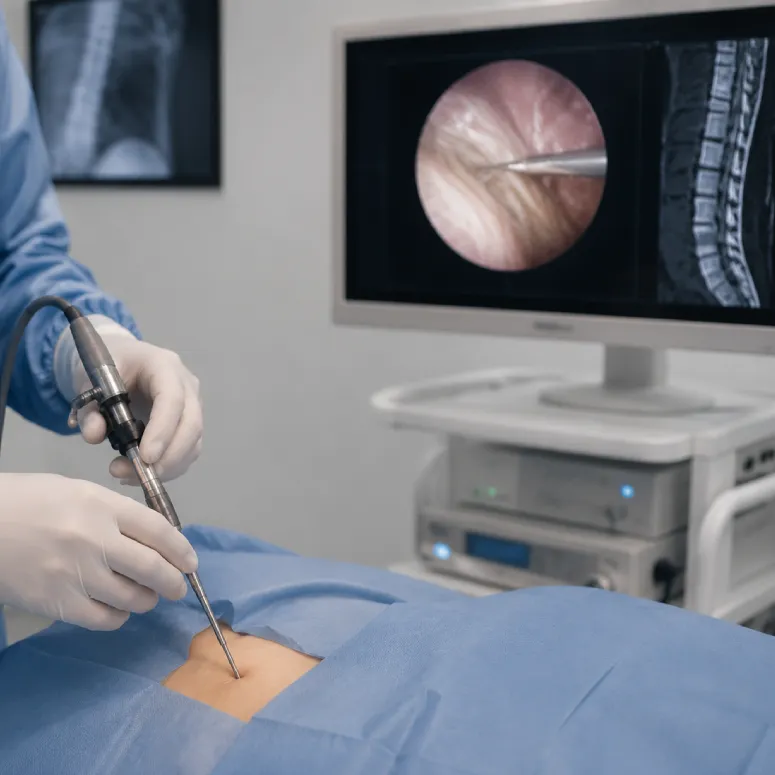
A high-definition endoscopic system equipped with a microcamera and specialized microsurgical instruments is introduced through a small, millimeter-sized incision.
The surgeon accesses the affected intervertebral foramen and performs selective decompression of the nerve root by controlled removal of compressive structures such as disc fragments, fibrosis, bone hypertrophy, or ligamentous tissue.
The goal is to widen the foraminal space and release the nerve root while preserving as much as possible the stability and normal anatomy of the spine.
Endoscopic transforaminotomy may be indicated in selected patients with:
- Lumbar or cervical foraminal stenosis
- Foraminal or extraforaminal disc herniation
- Lumbar or cervical radiculopathy
- Persistent sciatica or cervicobrachialgia
- Neural compression refractory to conservative treatment
- Post-surgical foraminal fibrosis
- Radicular pain associated with disc degeneration
The surgical indication should be individualized through specialized clinical assessment and advanced imaging studies.
The procedure is performed in an operating room under high-precision radiological and endoscopic control.
Depending on the clinical case and the level treated, the technique can be performed under local anesthesia with sedation or general anesthesia.
Minimally invasive transforaminal approaches allow direct access to the area of neural compression to perform selective decompression while preserving healthy muscle and bone structures.
The procedure usually requires a short hospital stay and, in many cases, can be performed on an outpatient basis or with early discharge.

Recovery and benefits
Thanks to its minimally invasive nature, functional recovery is usually faster than with conventional open surgical techniques.
The main advantages of endoscopic transforaminotomy include:
-
minimally invasive technique
-
Millimeter incisions
-
Less muscle and tissue damage
-
Precise neural decompression
-
Preservation of vertebral stability
-
Less postoperative pain
-
Faster functional recovery
-
Reduced hospital stay
At VERTEBRA SpinePain & Regenerative SURGERY CENTERS we perform advanced image-guided endoscopic spinal surgery and neural decompression techniques, offering highly specialized and personalized treatments for degenerative and compressive pathologies of the spine.