

From Discovery to Regenerative Medicine: The History of Mesenchymal Stromal/Stem Cells (MSCs)
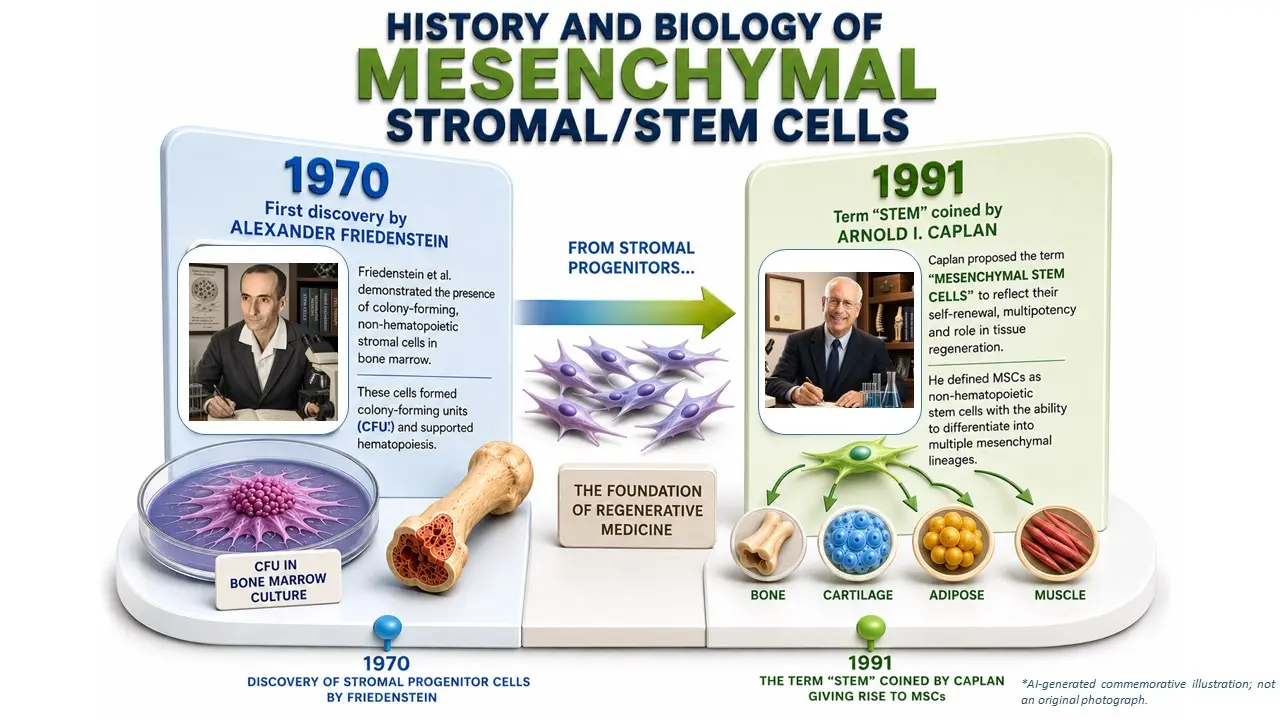
The story of Mesenchymal Stromal/Stem Cells (MSCs) is closely linked to two pioneering scientists whose discoveries helped shape modern Regenerative Medicine: Professor Alexander Friedenstein and Dr. Arnold Caplan.
Professor Alexander Friedenstein pioneered the discovery and characterization of stromal progenitor cells, demonstrating their clonogenicity, self-renewal and capacity to form bone, cartilage and connective tissues. His landmark work laid a fundamental biological foundation for the development of MSC research, tissue engineering and Regenerative Medicine.
Dr. Arnold Caplan helped establish the modern concept of MSCs, highlighting their paracrine and immunomodulatory functions, including anti-apoptotic, anti-fibrotic and angiogenic signaling that supports endogenous tissue repair. He further proposed that MSCs may arise from perivascular cells (pericytes), suggesting that they could be isolated from vascularized tissues including adipose tissue, a rich and accessible source of these cells.
Through their immunomodulatory and trophic properties, MSCs have been investigated as a regenerative therapeutic approach for various orthopaedic conditions, including degenerative osteoarthritis, chondral defects, tendinopathies, meniscal injuries, and muscle disorders.
At VERTEBRA SpinePain & Regenerative SURGERY CENTERS, we harness this Immunomodulatory, Regenerative and Angiogenic potential of autologous Adipose Derived MSCs and follow an individualized approach to treat chronic spinal and joint pain, integrating
clinical evaluation with MRI and advanced imaging such as SPECT-CT to support precise diagnosis and treatment planning. Our therapeutic strategy combines Minimally Invasive Interventions with Regenerative approaches, including AD-MSCs and other Orthobiologics.