

Sports and Joint Injuries
Meniscal Injuries
Meniscal injuries are among the most common knee disorders and can significantly affect joint stability, mobility, and the patient’s quality of life.
The menisci are fibrocartilaginous structures located between the femur and the tibia. Their primary function is to absorb load, stabilize the joint, and protect the articular cartilage of the knee.
Meniscal injuries can cause pain, inflammation, joint locking, and functional limitation in both young athletes and individuals with degenerative joint conditions.

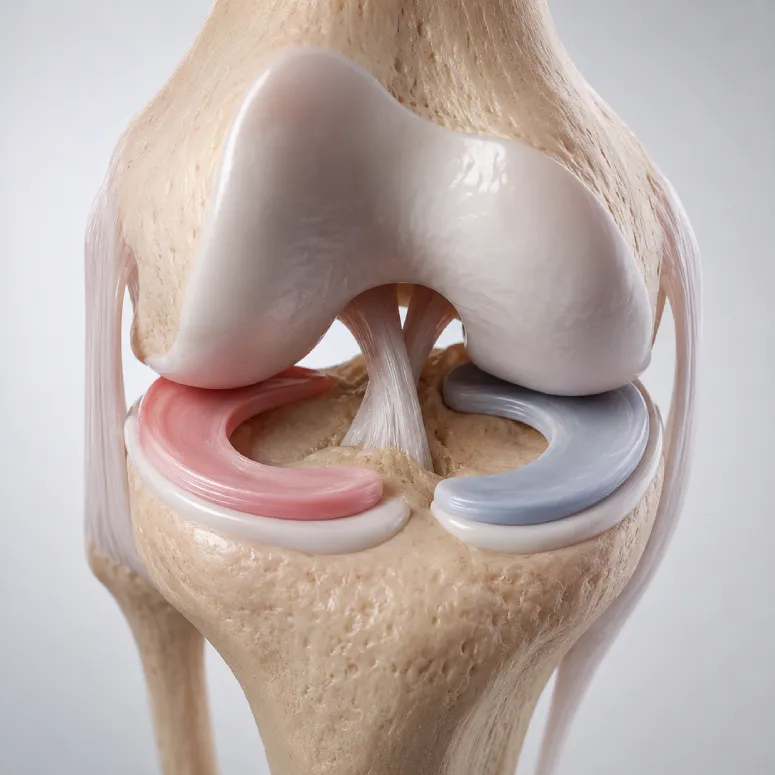
What Are the Menisci?
The knee has two menisci:
- Medial Meniscus (Inner Meniscus)
- Lateral Meniscus (Outer Meniscus)
These structures distribute mechanical loads across the joint and contribute to the normal stability and biomechanics of the knee.
When a meniscus is injured or degenerates, stress on the articular cartilage increases, which may accelerate the development of Knee Osteoarthritis.

What Are the Most Common Causes?
Meniscal injuries may occur as a result of acute trauma or progressive degenerative processes.
The most common causes include:
- Sudden twisting movements or sports-related injuries
- Repetitive mechanical overload
- Age-related degeneration
- Ligament instability
- Biomechanical abnormalities of the knee
- Osteoarthritis and joint degeneration
- High-impact physical activity
Degenerative meniscal injuries are particularly common in adult patients and may coexist with Knee Osteoarthritis.

What Are the Most Common Symptoms?
Among the most common symptoms are:
- Knee pain
- Localized pain along the joint line
- Inflammation or joint effusion
- Sensation of locking or clicking
- Functional limitation and difficulty walking
- Pain when bending or twisting the knee
- Sensation of joint instability
In certain cases, pain may become chronic and significantly limit physical and sports activities.
Advanced Diagnosis and Precision Medicine
Diagnosis requires a thorough clinical and biomechanical assessment together with advanced imaging studies.
Treatment of Meniscal Injuries
reatment will depend on the type of injury, the degree of degeneration, and the patient’s functional characteristics.
At Clínica VERTEBRA, we provide a comprehensive and personalized approach through conservative, regenerative, and advanced interventional treatments.
Among the available therapeutic options are:
- Specialized Pharmacological Treatment
- Advanced Functional Physiotherapy and Rehabilitation
- Biomechanical Correction and Muscle Strengthening
- High-Precision Ultrasound-Guided Infiltration Treatments
- Regenerative Medicine and Advanced Cellular Therapies
- Joint Viscosupplementation
- Radiofrequency and Neuromodulation for Knee Pain
- Arthroscopy and Minimally Invasive Surgery in Selected Cases
Regenerative therapies enable many patients to reduce pain, improve joint function, and delay the degenerative progression of the knee.
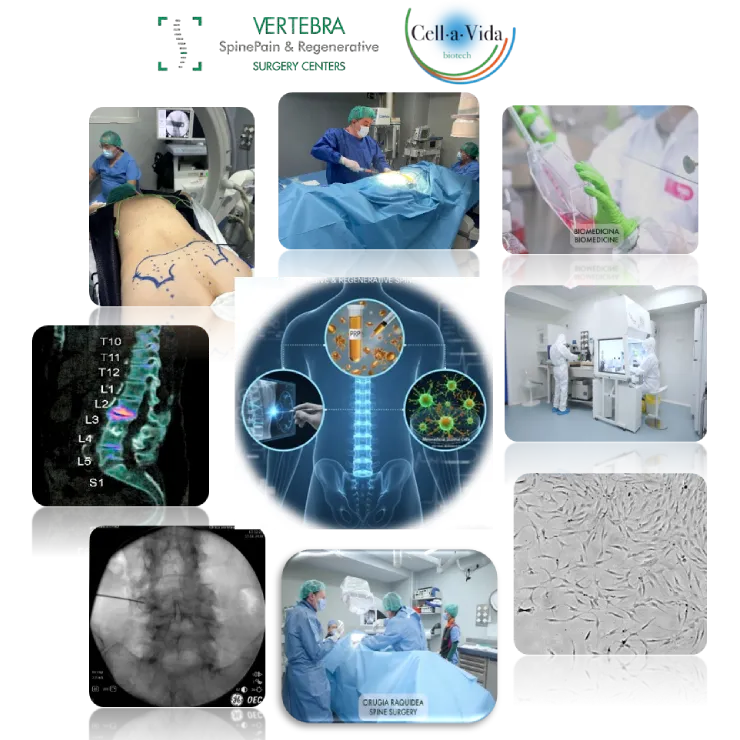
At VERTEBRA SpinePain & Regenerative SURGERY CENTERS, we have a highly specialized unit dedicated to Knee Pathology, Regenerative Medicine, and Advanced Musculoskeletal Interventional Procedures, providing personalized treatments using state-of-the-art, high-precision, minimally invasive techniques.
Our goal is to relieve pain, preserve joint function, and improve the patient’s mobility and quality of life.
Clínica VERTEBRA has a Laboratory with a Clean Room ( Safety Level III/IV ) for the culture and storage of Mesenchymal Stem Cells and other Orthobiologic products for AUTOLOGOUS administration ( from the patient’s own body ) in degenerative Joint conditions.
Contact us and regain your quality of life
