

Spinal pathologies
Coccygodynia
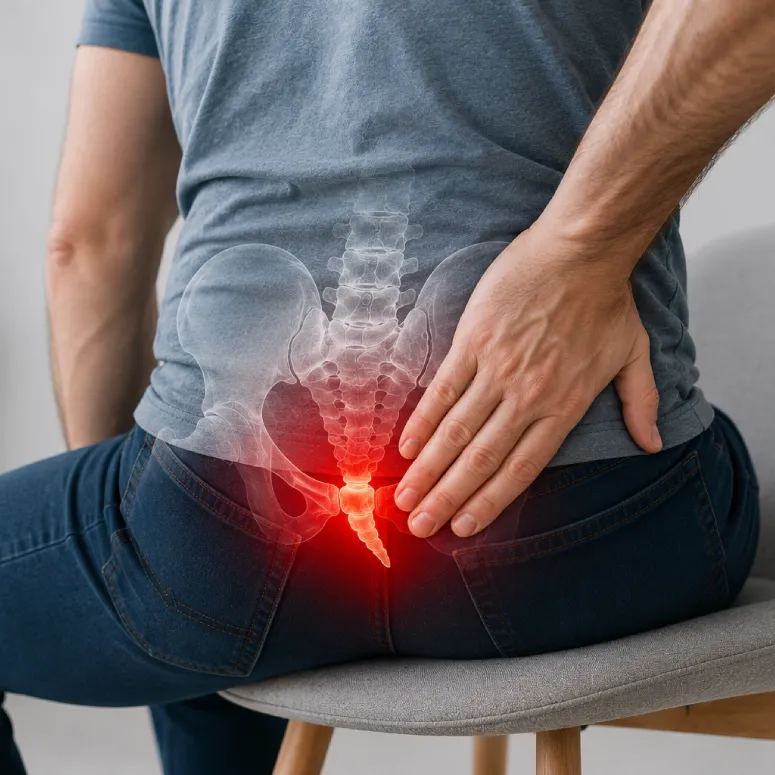
Coccydynia or coccygeal pain is a painful syndrome located in the coccyx region that can cause significant functional limitations and significantly affect the patient’s quality of life.
The pain usually intensifies when sitting, standing up, remaining in certain postures, or performing activities that increase pressure on the sacrococcygeal region.
Although in some cases the pain is self-limiting, certain patients develop persistent chronic pain associated with biomechanical, inflammatory, neuropathic or post-traumatic alterations that require highly specialized assessment.
What is the coccyx?
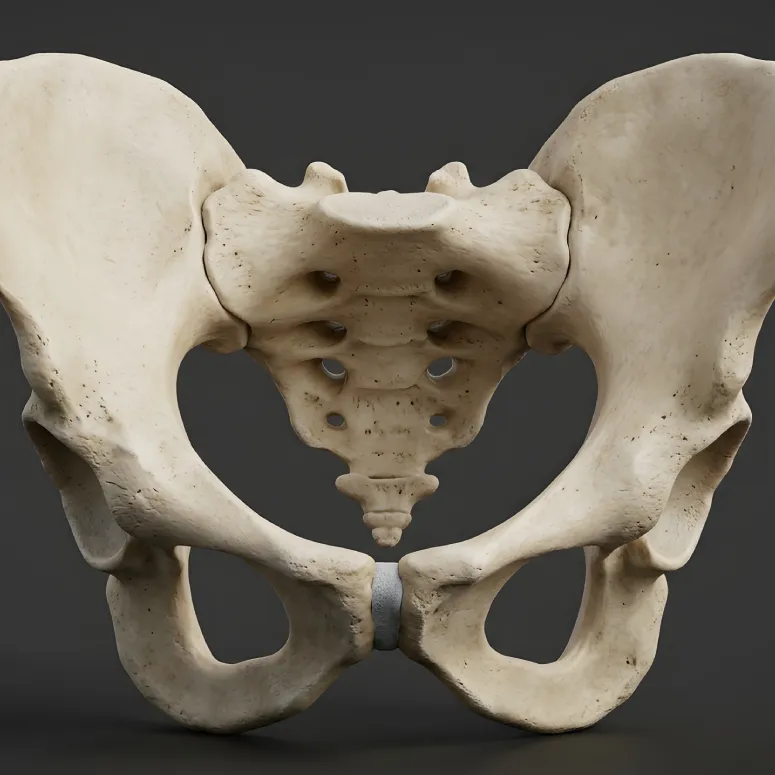
The coccyx constitutes the final portion of the vertebral column and is formed by small fused bony segments attached to the sacrum by complex ligamentous and muscular structures.
Despite its small size, it participates in pelvic stability and serves as an insertion point for multiple muscles and ligaments of the pelvic floor.
Coccyx abnormalities can cause intense local pain and persistent inflammatory or neuropathic phenomena.
What are the most frequent causes?
Coccydynia can develop due to multiple factors, including:
- Trauma or falls on the coccyx
- Repetitive microtrauma
- Coccygeal hypermobility or instability
- Sacrococcygeal joint degeneration
- Traumatic birth
- Prolonged mechanical overload
- Postural and biomechanical alterations
- Previous surgery or local fibrosis
- Neuropathic pain and nerve entrapments
- Myofascial syndrome of the pelvic floor
In some patients, a single clear cause cannot be identified, and the pain becomes progressively chronic.
What are the most common symptoms?
The symptoms may vary depending on the cause and the degree of inflammatory or neuropathic involvement.
The most common symptoms include:
- Pain localized in the coccyx region
- Pain when sitting or standing up
- Pain during prolonged sitting
- Sensation of pressure or pricking in the sacrococcygeal region
- Pain radiating to the pelvis, buttocks, or perineum
- Local hypersensitivity
- Functional difficulty with certain daily activities
In certain patients, the pain may coexist with pelvic floor disorders or associated lumbar and sacroiliac pain.
Specialized diagnosis
The diagnosis requires a detailed clinical assessment and studies aimed at identifying biomechanical, inflammatory, or neuropathic alterations of the coccygeal region.
Treatment of Coccydynia
The treatment will depend on the cause and the patient’s clinical evolution.
At VERTEBRA SpinePain & Regenerative SURGERY CENTERS we provide a comprehensive and personalized approach through conservative, interventional and advanced regenerative treatments.
Among the available therapeutic options, the following stand out:
- Specialized pharmacological treatment
- Physiotherapy and rehabilitation of the pelvic floor
- Postural correction and biomechanics
- Cushions and coccygeal unloading measures
- Ultrasound-guided and radioguided infiltrations
- Blocks of the impar ganglion
- Radiofrequency and neuromodulation
- Treatment of neuropathic and associated myofascial pain
- Regenerative medicine and biological therapies
- Image-guided minimally invasive techniques
At VERTEBRA SpinePain & Regenerative SURGERY CENTERS we have a highly specialized unit in pelvic pain, coccygeal pain and advanced image-guided intervention, offering personalized treatments using techniques of maximum precision and minimal invasiveness.
Our goal is to relieve pain, restore functionality, and significantly improve the patient’s quality of life.
Contact us and regain your quality of life
